Windows 10 installation media is freely available for Windows 8.1, Windows 10, and another version of windows on the official website of Microsoft Software. If users want to install Windows, they can download these files to install or reinstall Windows operating systems and repair respective Windows. Users just have a flash drive of at least 8 GB and a fast internet connection. Looking to Create a Bootable USB drive or Windows Installation media for Windows Upgrade Or Clean installation Purpose? Also some times ee require a Windows 10 installation Media to Access the Advanced Startup option to fix windows Startup problems. With Rufus all it took was just 1 button.

Need windows 10 installation media to troubleshooting startup problems? Or Looking for Create windows 10 bootable USB, for Windows 10 Upgrade or Clean installation Purpose? Also Some Times you may require a Bootable USB drive To Access the Advanced Startup option to fix windows Startup problems. Here In this post, we go through step by step guide on how to create windows 10 bootable USB from iso or Using the Official Media Creation Tool. The media creation tool permits users to download Windows 10 Home or Pro, and you can choose between 32-bit and 64-bit versions of both.

You have the option of installing directly to a USB flash drive or downloading a single or dual-use ISO to install to a disc later. It requires ISO image file of the windows. Select the ISO image and start the process. You can download the iso file of windows 10 using media creation tool as mentioned in method 1.

The user interface of ISO to USB app features a single-window separated into four main areas. On the top, users can locate their ISO file by typing its location on local storage or finding it via the Browse button. Below is the USB Drive section where the target drive is chosen from the dropdown menu. Here the File system , Volume Label, and Bootable checkmark can be added.

It is important to note that only Windows OS installation can be made into bootable form, Linux and other OS are not supported. Finally, in the bottom we have a diagnostic "Status" area and two main command buttons – Burn and Close. This minimalistic and straightforward interface empowers users of all knowledge levels to take control over their ISO files and easily transfer them to USB storage drives.
I used it exactly as you suggested on a Windows 7 system. Input was the 3 gb Windows.iso file created by the MSFT media creation tool. Rufus's bootable image output file fit onto a 4 gb USB flash drive.
ISO to USB is a lightweight media burning tool that can easily burn ISO image files directly from your storage to USB. As a free utility, Rufus helps its users to format and create bootable USB flash drives, such as USB keys, pen drives and memory sticks, etc. You will need it when you create USB installation media from bootable ISO, when you need to work on a system that doesn't have an operating system installed. Rufus is a utility that helps format and create bootable USB flash drives, such as USB keys/pendrives, memory sticks, etc.

Despite its small size, Rufus provides everything you need! For instance it's about twice as fast as UNetbootin, Universal USB Installer or Windows 7 USB download tool, on the creation of a Windows 7 USB installation drive from an ISO. It is also marginally faster on the creation of Linux bootable USB from ISOs. To begin, prepare a 2GB thumb drive and proceed to download the latest .iso version of the Linux or Windows operating system for desktop PCs and laptops.
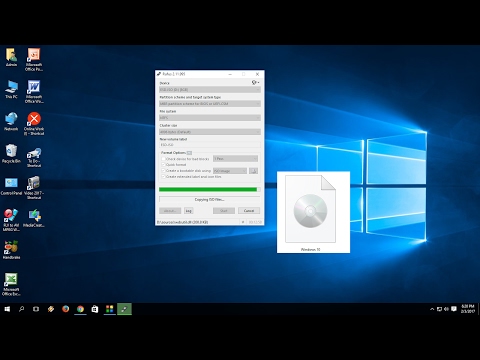
Below is a list of the most popular OS in .iso format. If you need to install or reinstall Windows 10, you can use Microsoft's media creation tool. This is an executable file that you can use to download the Windows 10 ISO file. Then, once the Windows 10 ISO image is downloaded, you can create your installation media (on a bootable USB drive or DVD/Blu-ray for example). Now when I boot it through Rufus for GPT partition. While installing window it say format USB Drive as FAT32.
When I Click FAT32 option in Rufus, it automatically change to NTFS when I select iso file. I hope you learned how to create Windows 10 installation media from this illustrated tutorial. These were some simple steps for making a USB flash drive. Also, don't forget to back up your data before installing windows.

To download windows 10 and select create installation media USB flash, then follow the given steps. With Windows 8 and next versions, most people prefer installing Windows using ISO files. Though installing Windows 10 from ISO is convenient as compared to purchasing Windows 10 DVD and then safeguarding the disc, getting ISO is not that straightforward officially. Especially if you want to try Windows 10 for free and want to download Windows 10 ISO without product key or license for trial period experience.
Initially, Windows 7 was installed using Windows 7 DVD, yes a single DVD is still sufficient to install Windows 7. Honestly speaking, I came to know abut Windows 7 in start of 2011 for the first time . I bought a DVD and installed it on my Pentium 4 PC. That was a lot more and soon I felt Windows XP has become a thing of past, yet I love it till now. People still use Windows 7 DVDs but most people have either moved to Windows 10 and Windows 11. However, Windows 7 ISO can be used to create a bootable flash drive to make installation process even easier and faster.

Since the availability of USB drives, the use of CD and DVD has prominently declined. The major reasons behind this are the ease of use, portability, larger capacity and faster copying of data files by the USB drives in comparison to the older methods. All you need is a flash drive with a capacity of more than 4GB, although 6 to 12 GB available space is ideal for storing additional files as well.

Create a bootable USB drive and keep it in a safe place that you can use this disk to easily fix the installation issues. Now you need to install the tool on your PC and then launch it, and you will have two options either to make the USB flash drivebootable to install windows or get the ISO file. Click the Select Download drop-down menu and choose the Windows 11 (multi-edition ISO) option. Choose the product language and click Confirm.
Then click the 64-bit Download button and save the ISO file to your hard drive. On Windows 10, you can use at least two tools to create a USB bootable media. You can use the Microsoft Media Creation Tool to download the files onto a removable storage with support for both firmware types . Or you can use Rufus, a third-party tool that makes it easy to create a flash drive to install Windows with support for UEFI. If you want to do a new installation of Windows 10 then you can download the Windows 10 Windows Media Creation tool. This will automatically download Windows and create a bootable media like USB or DVD for you.

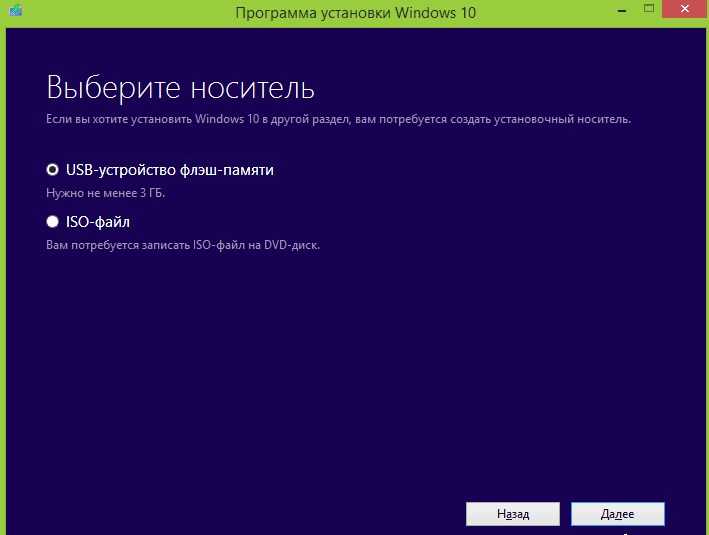
The media creation tool acts as a Windows 10 download tool plus a bootable USB builder. You can perform a clean install as well as upgrade your current installation. Once completed, wait for the download to complete and save in your installation media USB flash drive or your DVD or iso file. Select the method you want to create installation media from the provided options.Media USB flash drive.

Downloaded the media creation tool to install windows 10 installer on usb stick. Not compatible with a host of usb sticks I have. Tried the usb sticks that others use, but I think they use rufus; as the media creation tool by win 10 does not detect the usb stick. And it will consume more internet data, more disk space and will require a larger number of DVDs or a larger capacity of USB flash to create an installation media.

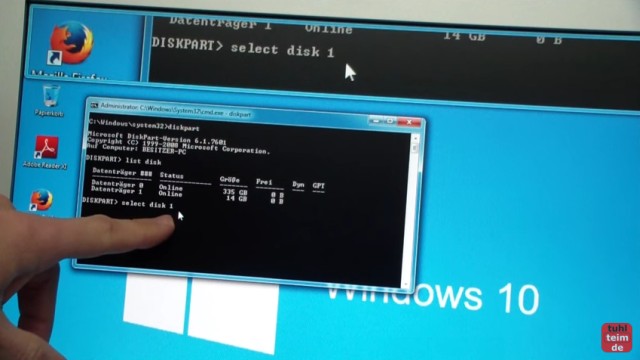
Whichever way you choose, you will use your Windows 11 ISO file to create a bootable install USB Flash drive or install Windows 11 in a virtual machine. You can even get away with skipping the product key so you can run the new operating system completely for free . On Windows 10, you can use two methods to create bootable media to install the OS from USB on a UEFI-based computer. You can either use the Microsoft Media Creation Tool to download the files onto removable storage with support for both firmware types or use a third-party tool, Rufus. The utility offers two ways to make the installation media, including using an existing ISO file or downloading the image from the Microsoft servers directly from the app. Hi All, Ive decided to use Diskpart to create a bootable USB flash drive instead of using the Media Creation Tool to create the Windows 10 media.

Im just going to use the Media Creation Tool to download the iso image and diskpart to prepare the... USB drives have become common due to their portability and ease of use. A bootable flash drive allows you to start your device from the flash drive's file system rather than your hard drive's. On the hard drive of your device, a boot sector contains details about how to use it. After all the above-given steps, click on Start to initiate windows installation media creation. There are some other methods to make a bootable flash drive or installation media using tools like RUFUS and PowerISO.
Can split large esd and wim files when creating bootable usb drive. As a top software developing company, MiniTool Software provides Windows users some useful software. For instance, you can use MiniTool Power Data Recovery to recover any deleted/lost data from Windows PC or laptop, memory card, USB flash drive, external hard drive, SSD, etc. You can use MiniTool Partition Wizard to easily manage hard drive partitions by yourself.

You can use MiniTool ShadowMaker to backup and restore Windows OS and back up files/folders/partitions, etc. To deal with video issues, you can turn to MiniTool MovieMaker, MiniTool Video Converter, MiniTool Video Repair, etc. The HP Recovery Manager program is part of the original hard drive image on HP computers released before 2018.

It can be used to recover the operating system from files stored in a partition on the hard drive without needing recovery media. It can also be used to create a personalized recovery disc or USB drive for a specific computer. How to download windows 10 bootable USB or ISO image for clean windows installation. Bootable disk is required when we need to do a fresh Windows installation. Bootable disk is a disk which contains special files to boot up or startup the computer to start a utility or program.

In this case to install a Windows 10 operating system we require a bootable disk to start the installation process of Windows 10. This article provides two ways you can download the latest Windows 10 ISO images from Microsoft. Windows 10 is the best and most reliable desktop operating system. It is developed, owned, and distributed by Microsoft. The best method to install Win 10 is to download Windows 10 ISO latest version with the full version of installation files. The download and installation process becomes easier when you have an ISO file of Windows 10, rather than using Media Creation Tool or other tools.

The boot menu can be personalized with folders, files and other items that are useful for the diagnostics. Unfortunately, you cannot preview the menu which means that you have to keep track of the inserted items. The recovery disk can be saved as an ISO file for burning it to a DVD or by creating a bootable disk from a removable USB device. The app automatically detects the connected USB device and turns it into a bootable recovery toolbox. Alternatively, you can try and use the USB drive as a bootable installation drive. However, this is where things get even more complicated, due to Windows 11 requiring Secure Boot, and the USB drive we just created not being compatible with that feature.
Once you complete the steps, Rufus will run the automated script to download the Windows 10 ISO file from the Microsoft servers. Then you can use the tool to create a bootable media to install Windows 10 on a UEFI device without the need for the Media Creation Tool. I want to windows bit all edition in iso file with activaation key so please send me a best website for download windows 10…. Once you type in a valid product key, you'll choose the language and whether you want to download the 32-bit or 64-bit version.
Note that the version of Windows 7 you get to download will depend on your product key. So if you are using a Windows 7 Home key, you'll only be able to download Windows 7 Home. To install Windows 11 from an ISO file, you can use different methods. You can use Rufus to create a bootable USB and then install the OS, or you can create Windows 11 bootable installation media using the Media Creation Tool. Or if you want a portable option, you can create a Windows To Go version of the OS on a suitable USB and then use it to utilize Windows 11 on your computer.

Microsoft offers you to download ISO files from their website, but only using Media Creation Tool. This tool lets you create a bootable USB. The drawback of this method is you will have to re-download the files, again and again, every time you need it.

In this post, we are talking about a procedure to download Windows 11 or Windows 10 ISO files directly from Microsoft servers, without using the multimedia tool. If your computer has less than 128 GB of free hard drive space, you are prompted to connect a USB hard drive to continue with the installation. Use a blank USB hard drive 32 GB or larger. When the installation is complete, Windows 10 Upgrade copies the windows.old file to the USB hard drive. The file is required if you decide to go back to the previous operating system.

This is the easiest and most reliable method. The utility automatically downloads Windows 10 and copy the files in USB disk by making it a bootable disk. This method can also be used to download the ISO file only. A bootable disk is not required when we upgrade from older operating system like Windows 7 to Windows 10.

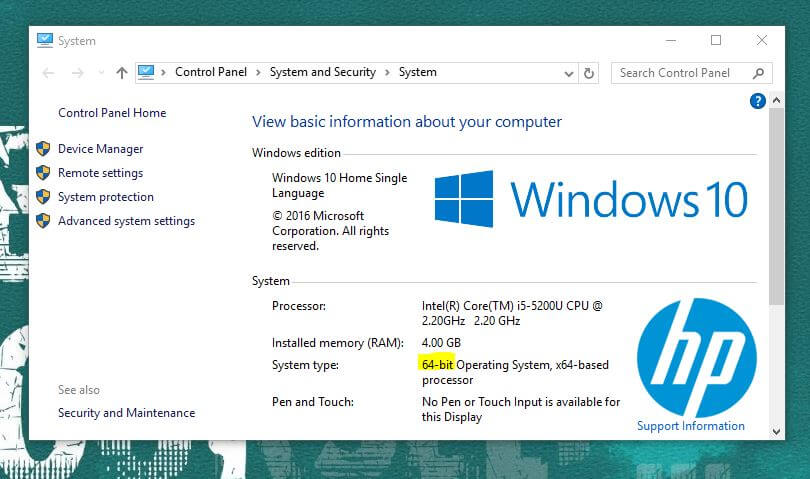
But if we downloaded an ISO file to install it on a different PC or for a clean install we must have to create a bootable disk. When you install Windows 10 to a USB, Microsoft asks you to choose the system's architecture, language, and edition. Check your license key to see if you want a Windows 10 Home or Windows 10 Pro download, and select 64-bit or 32-bit. Again, you can find your architecture in your System Information app, but you can always choose both if you have the space on the USB drive. Once downloaded, you will get the ISO file.


No comments:
Post a Comment
Note: Only a member of this blog may post a comment.